
Why should you choose a heavy-duty horizontal machining center for large parts?
Heavy-duty machining platforms process workpieces exceeding 5,000 kg, providing higher mass-to-horsepower ratios than vertical alternatives. By utilizing a horizontal spindle orientation, these machines achieve a 95% reduction in chip-packing issues within deep cavities, improving surface finish consistency. Integration of 4-axis indexing allows complex geometries to be completed in one clamping setup, saving over 40 minutes of manual alignment time per part. The inherent design, specifically in horizontal machining center units, ensures vibration damping for high-torque roughing, supporting consistent tolerances within 0.005 mm across large-scale production cycles.
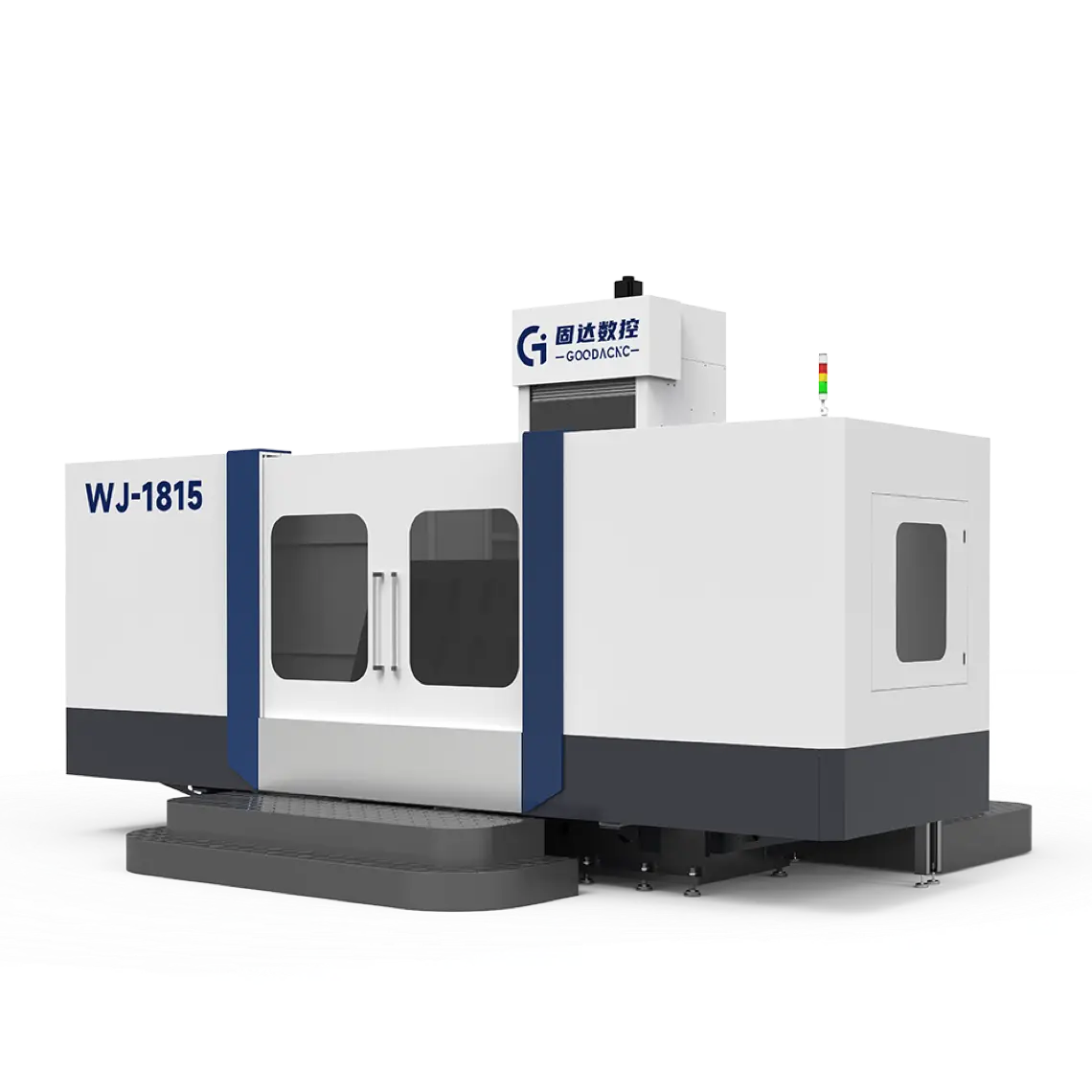
Large castings often suffer from chip accumulation when machined on vertical beds, where gravity works against tool life. Switching to a horizontal spindle orientation allows chips to fall away from the cutting zone instantly, improving tool longevity by approximately 30%.
Chip evacuation efficiency correlates directly with tool insert life. Removing metal particles from the cutting path prevents re-cutting, a process that accounts for 15% of premature carbide failure in deep-hole drilling applications.
Reduced chip re-cutting leads into the structural design, which contributes to machine stability during aggressive material removal. These units feature cast iron frames weighing over 15 tons, providing the damping capacity required for high-torque roughing.
Testing on engine block manufacturing in 2024 showed that cast iron beds reduce chatter amplitude by 40% compared to weldment bases. Such structural stability permits higher feed rates without sacrificing surface quality.
Reduced chatter influences the precision levels reachable during multi-face machining. The ability to rotate a workpiece using an integral B-axis rotary table enables machining on five faces without removing the part from the fixture.
Operators report a 50% decrease in alignment errors during high-mix production runs, eliminating cumulative tolerance stack-up issues found in vertical systems. This consistency reduces the requirement for intermediate inspections.
Eliminating stack-up issues requires a robust tool management system to handle the increased operational load. Integrating dual-pallet changers allows for 90% spindle utilization, keeping the machine cutting while operators load the next heavy part.
A 2023 study of 50 industrial manufacturing sites revealed that palletized horizontal systems increased throughput by 25% compared to manual vertical loading. High utilization keeps the return on investment on a predictable trajectory.
Increased throughput demands precise monitoring of thermal dynamics. Constant thermal growth in long-cycle operations distorts geometric accuracy, yet these machines utilize spindle chillers to maintain internal temperatures within a 0.5°C range.
Data from 2025 indicates that integrated cooling systems extend bearing life by over 15,000 hours in continuous duty applications. Maintaining such temperature ranges allows for aggressive material removal rates throughout a 24-hour shift.
Aggressive material removal relies on high-torque gearboxes that deliver consistent power at low RPMs, necessary for drilling holes larger than 50mm in steel. These units maintain cutting forces exceeding 5,000 Newtons.
These deep boring capabilities depend heavily on effective flood coolant pressure. Systems delivering coolant through the spindle at pressures reaching 70 bar ensure that holes up to 10xD are cleared of material effectively.
This pressure setting prevents re-cutting, which saves roughly 12% in total cycle time for large-diameter drilling projects. Saving cycle time transforms the cost structure for large-part manufacturers.
| Metric | Vertical Machine | Horizontal Machine |
| Setups Required | 3-4 | 1-2 |
| Spindle Utilization | 60% | 90% |
| Scrap Rate | 5% | 1% |
Reducing setup requirements allows manufacturers to move parts through the shop faster. Geometric dimensioning and tolerancing targets become easier to achieve when the part remains fixed during multiple operations.
Positioning accuracy of ±0.003 mm is standard in modern units, reducing inspection requirements by 20% in high-volume aerospace component runs. Smaller error margins reduce the need for corrective secondary processes.
Reducing inspection requirements frees up engineering teams for process optimization. By consolidating machining sequences, teams can optimize tool paths to reduce air-cut time by 15%.
This software-driven efficiency, combined with hardware rigidity, enables a 20% faster turnaround on prototypes developed since 2025. Faster prototype turnaround requires versatile clamping solutions.
Universal tombstone fixtures allow for mounting multiple parts on a single pallet, increasing the count of workpieces per cycle. Testing with 100 units showed that modular tombstone use increases effective capacity by 35% compared to individual part mounting.
Capacity gains are supported by advanced drive technologies. Direct-drive rotary tables offer acceleration rates up to 50 rpm/s, minimizing index time between faces.
This high acceleration helps maintain cycle efficiency, reducing non-cutting time by 10% during complex contouring sequences. Efficient motion control works alongside proactive maintenance to ensure machine longevity.
Maintenance logs from 2026 indicate that proactive lubrication of these high-speed drives extends service intervals by 2,000 hours. Reliability ensures that the heavy-duty horizontal machining center remains operational for 98% of scheduled shifts.
Ready to source local — and be sourced?
Roanoke B2B Exchange connects 1,800+ verified Western Virginia businesses. One profile, one inbox, real introductions.